
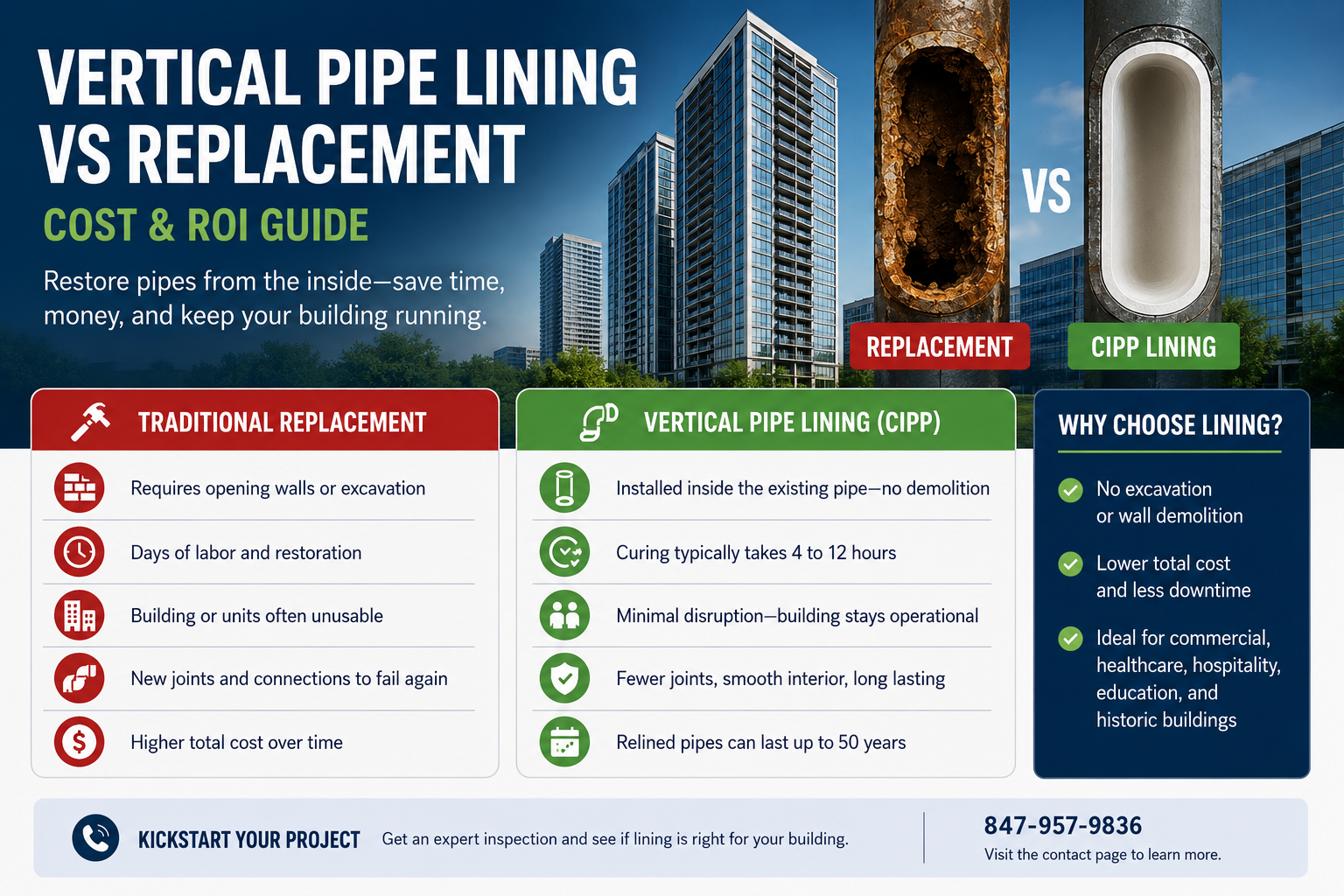
Vertical Pipe Lining vs Replacement: Cost and ROI Guide
Replacing a vertical pipe usually means opening walls and shutting down part of a building for days. The real choice is whether to tear the pipe out or restore it from the inside. For most commercial buildings, cured-in-place pipe (CIPP) lining wins on time, cost, and disruption.
| Traditional Replacement | Vertical Pipe Lining (CIPP) |
| Requires opening walls or excavation | Installed inside the existing pipe, no demolition |
| Days of labor and restoration work | Curing typically takes 4 to 12 hours |
| Building or units often unusable during work | Minimal disruption, building stays operational |
| New joints and connections to fail again | Fewer joints, smoother continuous interior |
| Lifespan varies by materials and install quality | Relined pipes can last up to 50 years |
Why Choose Lining Over Replacement?
Lining fixes the pipe without tearing into the building around it. Property managers weighing vertical pipe lining vs replacement often find replacement gets expensive fast once labor and lost operating time are added in.
- No excavation or wall demolition to access the pipe
- Curing often happens same day for 1-inch to 12-inch lines
- Tenants, patients, or guests are not displaced
How Long Does Lining Take Compared to Replacement?
Most vertical CIPP jobs cure in four to twelve hours, faster than replacement, which requires demolition and rebuilding. Pipes buried in walls or running deep underground are the clearest case for lining, since excavation would otherwise be unavoidable.
What Does Lining Mean for Long-Term Costs?
Lining protects the budget by avoiding the hidden costs of replacement. CIPP can occasionally cost more per foot than raw pipe, but it skips the expenses tied to opening walls and closing off space during construction. Relined pipes also last, with an effective lifespan of up to 50 years.
- Avoids the cost of drywall or structural repair
- Long service life reduces repeat repairs
Is Lining Safe for Older or Historic Buildings?
Yes, lining is often the safer choice where the structure itself is a concern. CIPP works from inside the existing pipe, avoiding the excavation that can damage older construction. This is why it is used more often on historically protected buildings, plus healthcare, hospitality, and education facilities where disruption has to stay minimal.
Frequently Asked Questions
Is pipe lining as durable as full replacement?
Yes. Relined vertical pipes can last up to 50 years, without the disruption of tearing out the old pipe.
Will lining work on badly deteriorated pipes?
Often, yes. CIPP can rehabilitate pipes in poor condition and even bridge missing sections, resulting in one solid pipe once it cures.
Does lining disrupt the building during installation?
Very little. There is no need to open walls or dig trenches, so the building can generally stay in operation while the work is done.
How do I know if my building needs replacement instead of lining?
A trained technician can inspect the pipe and recommend the right approach for vertical pipe lining vs replacement. Reach out for an estimate to find the right fit for your property.
Vertical CIPP serves commercial properties across Texas, including healthcare, hospitality, education, and high-rise buildings. Call 847-957-9836 or visit the contact page to talk through your project.