
Repairing Vertical Pipes Without Demolition: Modern Solutions Explained
High-rise property managers often face a logistical nightmare when a primary sewer stack fails. Traditional methods require cutting into every floor of a building to swap out old cast iron. We know that homeowners and hotel guests hate the noise, dust, and displacement that come with major construction. Repairing vertical pipes can seem hard, but we have a solution. Read on to learn more.
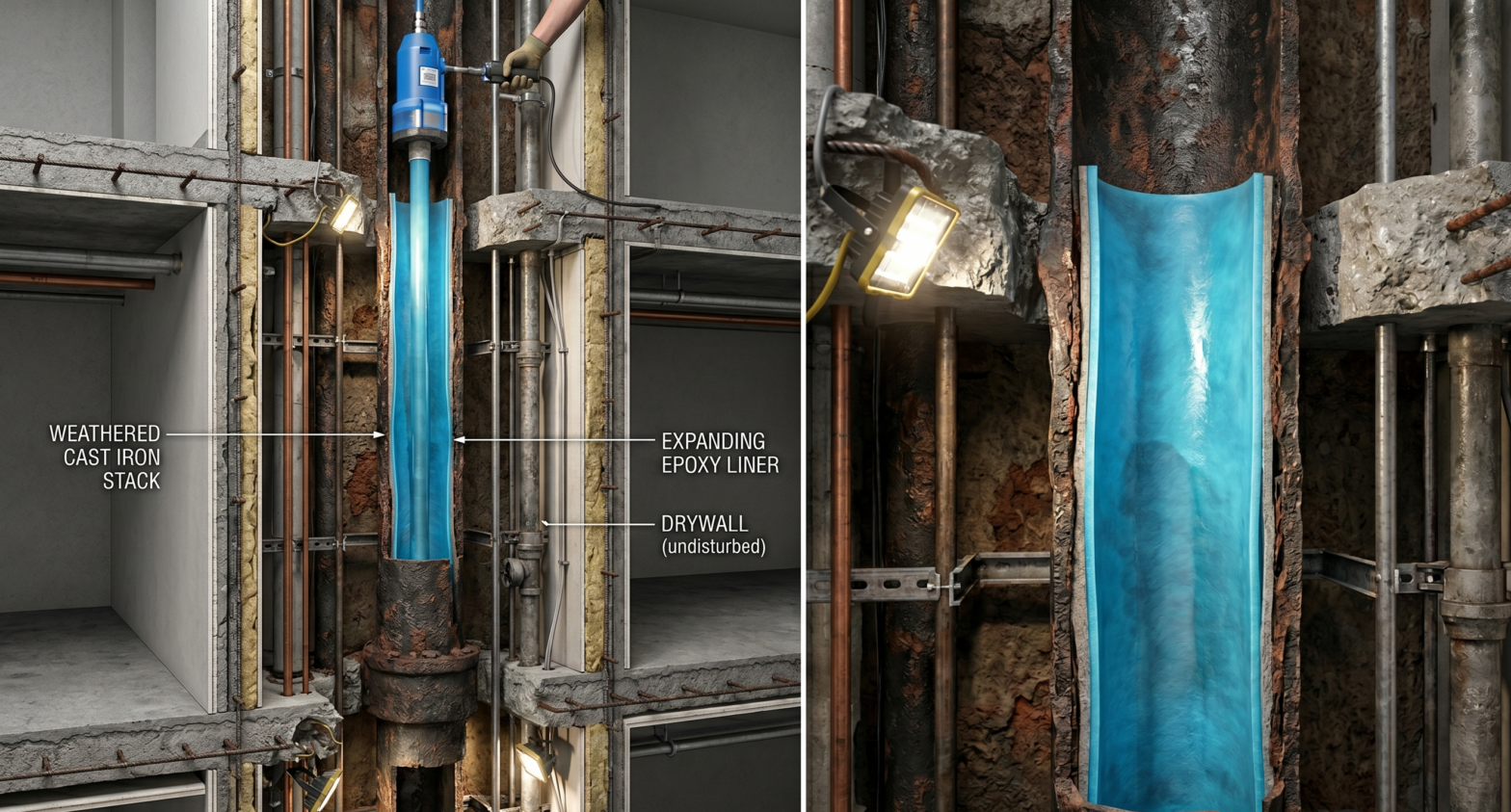
Modern technology now allows repairing vertical pipes from the inside out. Our team at Vertical CIPP uses specialized resins to coat the interior of existing lines, essentially creating a new pipe within the old one. This process saves weeks of work and thousands of dollars in restoration costs.
How Vertical Pipe Repair Works for High-Rises
Vertical stack lining involves a non-invasive rehabilitation technique known as Cured-In-Place Pipe (CIPP). This method is effective for sanitary sewer stacks, roof drains, and vent lines ranging from 2 to 12 inches in diameter.
| Feature: | CIPP Lining: | VS Traditional Replacement: |
| Average Timeline | 1-2 Days per stack | 7-14 Days per stack |
| Wall Demolition | Zero to minimal | Extensive per floor |
| Expected Life | 50-Year rating | 30- to 50-Year rating |
| Noise Impact | Low | High (Jackhammers/Saws) |
The process begins with a high-pressure cleaning to remove decades of scale and buildup. Once the host pipe is prepared, we insert a flexible liner saturated with epoxy resin. The liner is then cured using heat, forming a structural bond that seals all leaks and prevents future corrosion.
The Technical Reality of Resin Curing
If a building has active leaks in a vertical stack, then a video inspection identifies the exact failure points. If the pipe is cleaned to the original wall, then the resin achieves maximum adhesion. High-rise environments require specific epoxy formulations that do not sag during the vertical application process.
Lining vertical systems helps avoid:
- Mold growth behind drywall from pinhole leaks.
- Expensive asbestos testing and abatement for older buildings.
- Structural damage caused by large scale trenching.
Why Repairing Vertical Pipes is the Better Choice
Choosing a trenchless fix means your building stays operational during the project. We often complete the work while tenants are still in their units. For commercial properties, this means zero lost revenue from closed floors or offices. Repairing vertical pipes is a proactive way to extend the life of your infrastructure without the mess.
The cost of traditional repair is often 30% to 50% higher once you factor in the “hidden” expenses of drywall, paint, and tile restoration. We focus on providing a seamless solution that addresses the source of the leak permanently. If you wait until a total collapse occurs, then your options become much more limited and expensive.
Decision Logic for Facility Managers
If you notice damp spots on lower-level ceilings, then a vertical stack is likely compromised. If a camera inspection shows significant thinning of the cast iron walls, then lining should be scheduled immediately to prevent a burst.
Modern Performance for Vertical Stacks
The result of repairing vertical pipes is a smoother interior surface that actually improves flow rates. The epoxy is resistant to the chemicals and waste that typically erode metal pipes over time. This makes it the ideal choice for high-traffic buildings like hotels or condos.
Here is the deal: your plumbing shouldn’t be a source of constant stress. We provide the expertise needed to handle complex vertical repairs with zero drama. If you want a permanent fix that respects your building’s residents and your budget, then CIPP is the answer.
Don’t let a leaking stack turn into a major flood. Call Vertical CIPP at 847-957-9836 or visit our contact page to get an expert assessment of your plumbing today.
Have you had a camera inspection performed on your building’s primary stacks in the last five years?